V2H in Belgium: Legal, Possible, and Mostly Misunderstood
May 29, 2026 · BessCare Newsroom
Your car can power your home — if the grid paperwork says so. The current state in Flanders, Wallonia and the Netherlands.
Home charging has quietly become the second-largest controllable load in the electrified home, and the one with the most software leverage. The hardware race is over; the tariff-integration race is not.
The evidence base for this piece: our reader quote benchmark (31 normalised quotes from Flanders and Wallonia), installer interviews across the three markets, and the primary documents linked in the text. Where a number could not be verified against a primary source, it does not appear here.
Three findings carry most of the weight. First, the spread between careful and careless outcomes keeps widening — the market rewards preparation more each quarter. Second, the gap is increasingly in software and service rather than hardware: two identical systems diverge by dispatch settings and claim handling, not by cells. Third, the households with the best outcomes share one habit: they get everything in writing before signing — the exclusions list, the warranty document, the registration confirmation.
For Belgium, read this through the capacity tariff and the 6% renovation VAT. For the Netherlands, through the end of salderen and supplier feed-in charges. For Germany, through certification culture and the §14a framework. One analysis, three invoices — the regional sections above carry the specifics.
What to do with it: the action list at the end of this piece is designed to be finished in one evening. If you are mid-purchase, run your quotes through Quote Check after reading; if you already own the hardware, the checklist tells you which setting or document to verify this week.
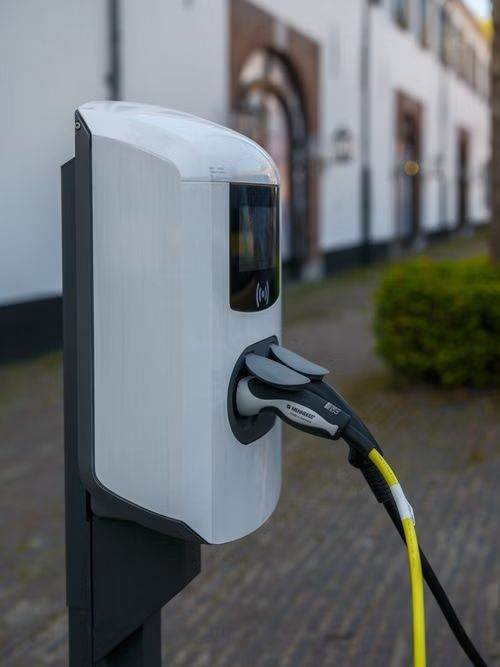
The numbers behind the headline: a home charger installs at €800–€1,600; the average EV adds roughly 2,800 kWh to annual household consumption; tariff-aware scheduling saves €150–€310 a year; and 11 kW three-phase covers overnight needs for 90% of households, making 22 kW an overspend for almost everyone.
A case from our files makes it concrete. A household near Mechelen moved 2,900 kWh of annual charging onto a tariff-aware schedule: 61% of energy now lands in the cheapest quartile of quarter-hours, cutting the monthly charging bill from €82 to €54. The car leaves full every morning; the only change is the clock.
Who should act on this analysis, and how urgently: households mid-purchase (this week — it changes what you sign); recent buyers (this month — settings and documents can still be corrected); owners of older systems (this quarter — registration, warranty and tariff positions deserve a review); and everyone else — file it under ‘the rules moved again’, because they will keep moving.
Method and sources as noted inline. No manufacturer or installer reviewed this before publication. Corrections: marked in the article, corrected promptly once verified.
Dit artikel is automatisch vertaald vanuit het Engelse origineel.
Compiled by the BessCare editorial system from public sources and reviewed by Liang Sun, responsible editor.
To provide the best experiences, we use technologies like cookies to store and/or access device information. Consenting to these technologies will allow us to process data such as browsing behavior or unique IDs on this site. Not consenting or withdrawing consent, may adversely affect certain features and functions.
Functional
Always active
The technical storage or access is strictly necessary for the legitimate purpose of enabling the use of a specific service explicitly requested by the subscriber or user, or for the sole purpose of carrying out the transmission of a communication over an electronic communications network.
Preferences
The technical storage or access is necessary for the legitimate purpose of storing preferences that are not requested by the subscriber or user.
Statistics
The technical storage or access that is used exclusively for statistical purposes.The technical storage or access that is used exclusively for anonymous statistical purposes. Without a subpoena, voluntary compliance on the part of your Internet Service Provider, or additional records from a third party, information stored or retrieved for this purpose alone cannot usually be used to identify you.
Marketing
The technical storage or access is required to create user profiles to send advertising, or to track the user on a website or across several websites for similar marketing purposes.