

This article was generated with AI assistance from cited sources and has not been individually reviewed by an editor.
When a storage manufacturer enters the European C&I market, it lands one of three ways. Each is a different answer to the same question — how close can service be to the asset — and each has a cost structure the owner eventually pays for.
The manufacturer incorporates a local entity, hires local engineers, and holds local spares. Cost to the vendor: highest. Registration, compliance, employment and inventory in every target country are expensive and slow. Control: highest. The vendor owns the whole service chain, so response and quality are its direct responsibility. This is how the largest, best-capitalised players — the tier-one names with multi-gigawatt European pipelines — land, because only they can carry the fixed cost across enough volume. The owner gets the deepest service, and pays for it in the product price.
The manufacturer sells through a regional distributor, who handles sales and first-line service, while the manufacturer keeps the deep-repair and engineering function. Cost: middle. The vendor shares the local fixed cost with the distributor. Control: split, which is exactly the risk — the owner has two parties to hold, and the handoff between distributor service and manufacturer engineering is where accountability can slip. This model works where a distributor already has a mature local electrical-services business; it is thin where the distributor is really a sales channel with a service desk added as an afterthought.
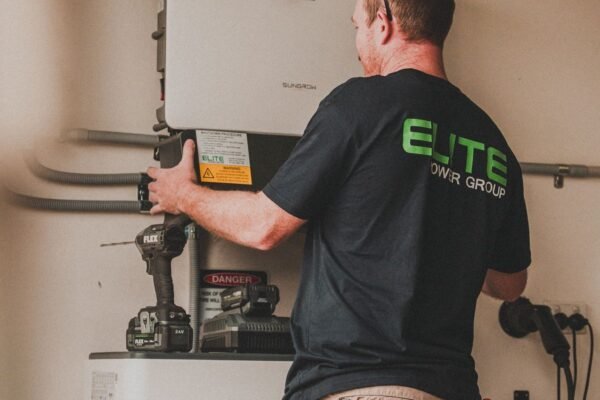
The manufacturer certifies independent local service companies to install, maintain and repair, using the manufacturer’s tooling, training and parts pipeline. Cost to the vendor: lowest — no local entity, no local headcount, no local inventory. Control: lowest but distributed, which is precisely why it wins the mid-market. C&I projects are geographically scattered and individually small; a certified partner already lives near the asset and already runs an electrical-services business. The manufacturer supplies the parts and the playbook; the partner supplies the proximity.
The mid-market C&I segment — the 100 kWh to a few MWh systems behind the meters of factories, cold stores and depots — does not have the density to justify a direct subsidiary in every region, and does not tolerate the slow response of a distant engineering team. A certified partner network matches the geography of the demand: the asset is local, so the service must be local, and a partner is local by construction. The trade-off the owner must police is certification depth: a partner network is only as good as the manufacturer’s audit of its partners. Ask to see the certification criteria, the training records, and the escalation path to manufacturer engineering — because a partner network without a rigorous manufacturer behind it is just a phone list.
No manufacturer or EPC reviewed this guide before publication. Corrections are published, and flagged, within 48 hours of verification. Sources: CNESA C&I deployment data (June 2025, 328.6 MW / 841.4 MWh, C&I = 99% of user-side); SNEC 2025 shift from hardware to AI-driven O&M (InfoLink Consulting); BNEF global storage forecast (2025, 92 GW / 247 GWh).