
This article was generated with AI assistance from cited sources and has not been individually reviewed by an editor.
The C&I storage industry sells systems well and services them poorly. The purchase is globalised and competitive; the after-sales is localised and, too often, thin. This guide maps the demand side’s four requirements against the supply side’s four weaknesses, and the eighteen-month window that frames both.
1. Localization. The asset owner needs a technician who can be on site in hours, not a call centre routing to a factory in another country. 2. Same/next-day response. Downtime on a revenue-generating asset is money lost; a C&I battery idling through a peak event is not “awaiting service,” it is failing to earn. 3. Compliant employment. Whoever maintains the asset must be legally employable and certified in the country of operation — an ad-hoc subcontracted crew is a liability. 4. Auditable records. Every intervention must be logged to the standard an insurer or an investor can audit, because both will.
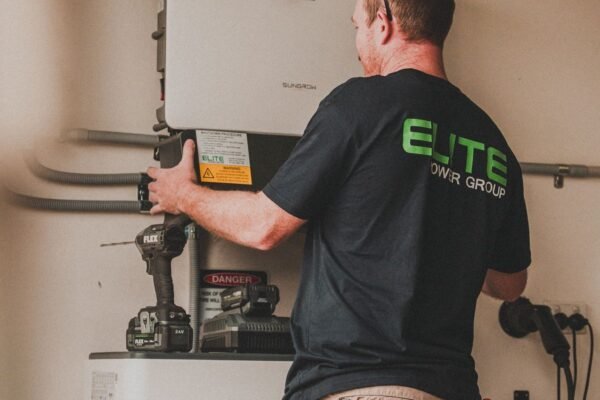
1. Thin local service benches. Many vendors entered the European C&I market with a sales office and a promise, but the service bench — the actual trained technicians and the spare-parts stock — was backfilled later, if at all. 2. Response-time commitments that are not contractual. A marketing slide promising “24/7 support” is not the same as a contract with a penalty for a missed response window. 3. Reliance on fly-in or subcontracted labour. When the vendor has no in-country workforce, the “engineer” who arrives may be a subcontractor with no direct accountability to you, and no audit trail that survives a dispute. 4. Records that evaporate. A maintenance visit that is not written down, with parts, timestamps and outcomes, is a visit that never happened as far as your insurer and your investor are concerned.
Why eighteen months? Because that is roughly the period in which a newly installed European C&I asset’s first serious service events appear — first degradation checks, first thermal-management issues, first firmware-driven downtime — and it is also the period in which the industry’s post-sales infrastructure either scales or is exposed. The market is entering that window now: Belgium is expected to reach around 4 GW of installed BESS by 2030 (Clean Horizon, 2026), the Netherlands is contracting large batteries specifically to relieve congestion (TenneT’s 800 MWh Sequoia deal, April 2026), and Germany’s C&I buildout is colliding with the AgNes grid-fee reform timetable. All of that new capacity will need service, and the after-sales gap is where the buyers who did not ask the right questions will pay.
Turn the four requirements into contract clauses before you sign: name the service bench and its location, put a number and a penalty on response time, require that all labour be directly employed and certified in-country, and make auditable records a condition of the warranty. If the vendor cannot commit to all four in writing, you are not buying a serviced asset — you are buying a product and inheriting the service gap yourself. In Belgium, the Netherlands and Germany, where grid fees, congestion and certification are all moving, an unserviced battery is not just a nuisance; it is a financial and compliance exposure.
No manufacturer or EPC reviewed this guide before publication. Corrections are published, marked, within 48 hours of verification. Sources: Clean Horizon Belgium forecast (2026); TenneT/ACM Sequoia announcement (April 2026); BNetzA AgNes timetable (2026).